The Ruta 40 guide · Guide
Crossing the Puna
Salt flats, volcanoes, pumice fields and salt-mining villages above 3,500 metres — what to expect from Argentina's high desert and how to travel it safely.
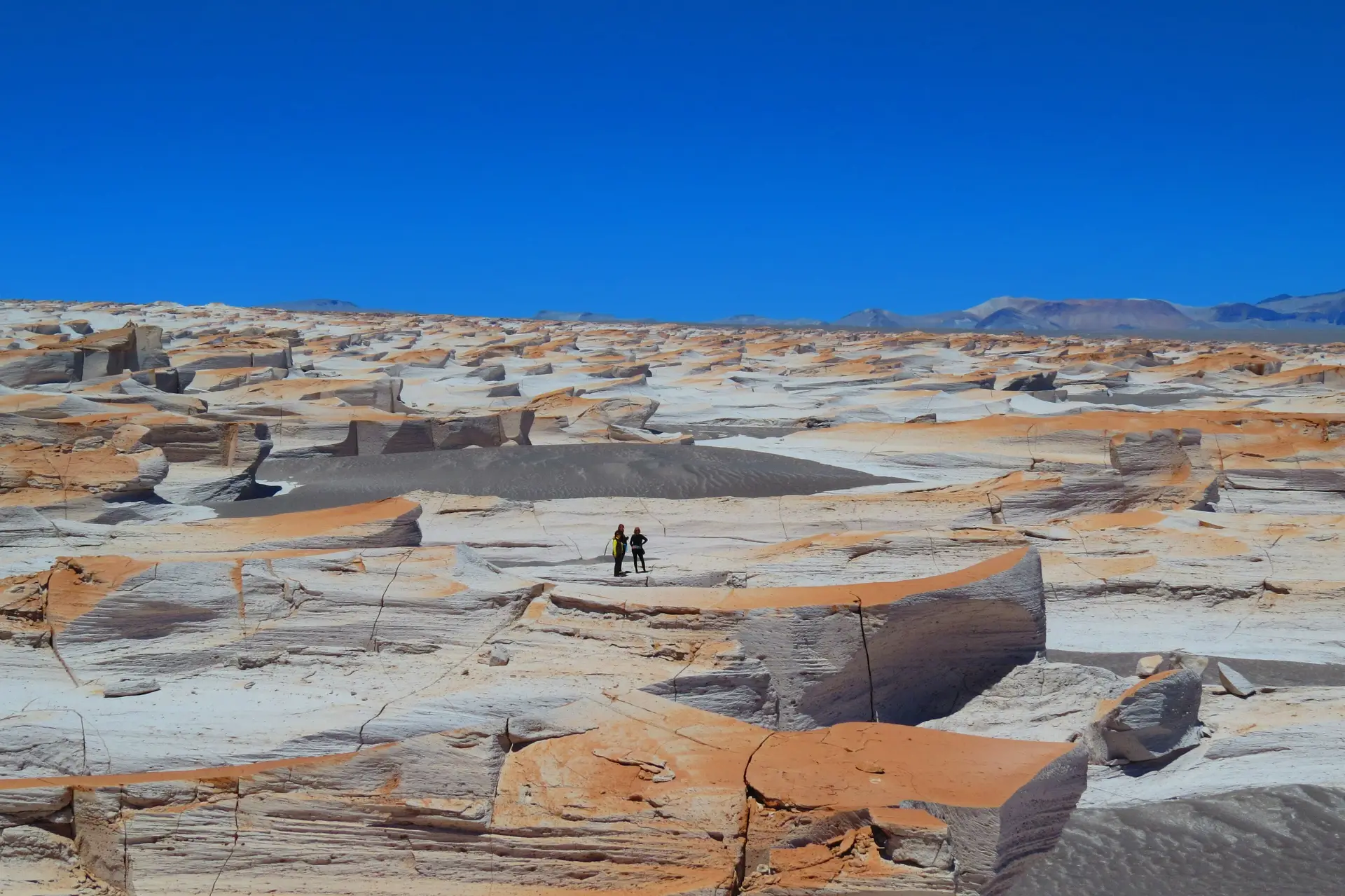
The Puna is the high plateau that runs along the western edge of the Northwest, a desert sitting mostly between 3,500 and 4,500 metres. It is the emptiest landscape in Argentina and the most demanding: enormous light, almost no water, and distances that are measured in hours rather than kilometres.
Salinas Grandes
The easiest introduction. A salt flat of around 200 km² on the border of Salta and Jujuy, reached from Purmamarca by the Cuesta de Lipán, which climbs to 4,170 m at the Abra de Potrerillos before dropping onto the plain.
Go in the morning: the light is cleanest and the afternoon wind is harsher. The salt is actively worked, so stay with a local guide on the designated areas rather than driving out across the crust. After summer rain a shallow film of water turns the surface into a mirror.
Further in
Beyond Salinas Grandes the Puna gets serious. San Antonio de los Cobres, a mining town at 3,775 m, is the usual staging post. South and west of it lie the Salar de Arizaro, the Ojos del Mar at Tolar Grande, and, across the border in Catamarca, the Campo de Piedra Pómez — a field of white volcanic rock eroded into waves — and the Antofagasta de la Sierra lagoons with their flamingos. These need a 4x4, a local driver and several days.
Altitude
Nearly everything here is above 3,500 m. Spend at least one night at an intermediate altitude — Purmamarca, Tilcara or Humahuaca — before going higher, climb gradually, drink far more water than feels necessary, eat lightly and skip alcohol. Headache, nausea and breathlessness mean descend, not push on. See our guide to travelling at altitude for the detail.
Practicalities
- Fuel: fill up in Purmamarca, Susques or San Antonio de los Cobres. Stations beyond are rare and sometimes dry.
- Water and food: carry your own for the whole route, plus a reserve.
- Temperature: 25 °C at midday and below freezing at night is normal year-round. Layers, a windproof shell, hat, sunglasses and high-factor sunscreen are not optional — the UV at this altitude is extreme.
- Communications: no mobile coverage over most of the plateau. Tell someone your route and expected return.
- Vehicle: high clearance for anything off the paved RN52, and never travel alone on remote tracks.
When to go
April to November is the dry season and the reliable window. January and February storms can flood the salt flat and cut the gravel routes for days. Winter nights are the coldest, often well below freezing, but the days are brilliantly clear.
Doing it with a guide
For anything beyond Salinas Grandes, an organised trip is the sensible choice. Operators in Salta, Purmamarca and San Antonio de los Cobres run multi-day Puna circuits with the vehicle, fuel, altitude experience and communications that independent travel here demands.